- BikeDest
- Smartphone
- vivo X500 Pro
vivo X500 Pro
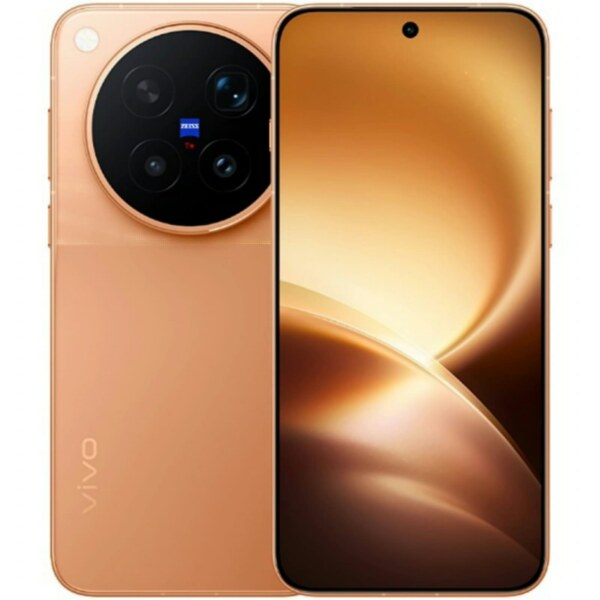
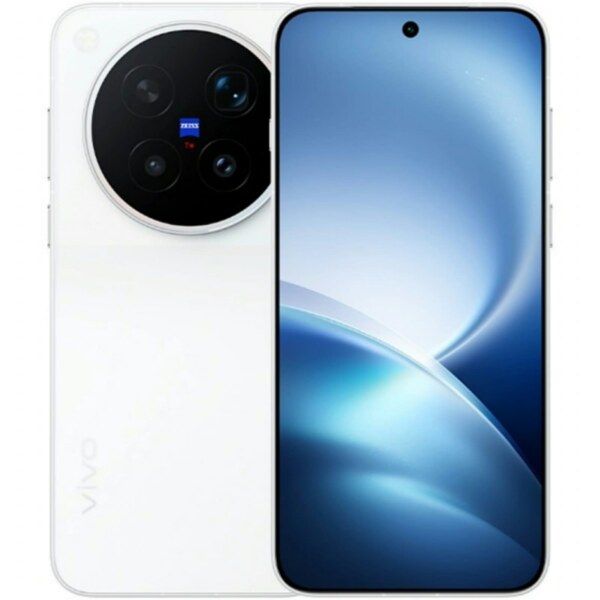
Specifications
Launch
| Announced The date when the smartphone was officially revealed by the manufacturer. This is usually before the release date and helps track when the model was introduced | 21 September, 2026 |
| Status Indicates the smartphone's availability with the latest update: 'Upcoming' (launching soon), 'Available' (currently for sale), 'Rearmed' (restocked on a specific date), and 'Stockout' (unavailable since a certain date | Coming Soon |
| BD Released | 23 September, 2026 |
| Made By | China |
| Assembled in | Bangladesh |
Body
| Dimensions (WxHxT) | 151.8 x 71.9 x 8.1 mm (5.98 x 2.83 x 0.32 in) |
| Build Material Build refers to the materials used in the phone's construction, such as a glass front and back for a sleek look, a titanium frame (Grade 5) for durability, or an aluminum body for a lightweight design. | Glass front, aluminum frame, glass back or glass-fiber reinforced plastic back |
| Weight | 192 g or 197 g (6.77 oz) |
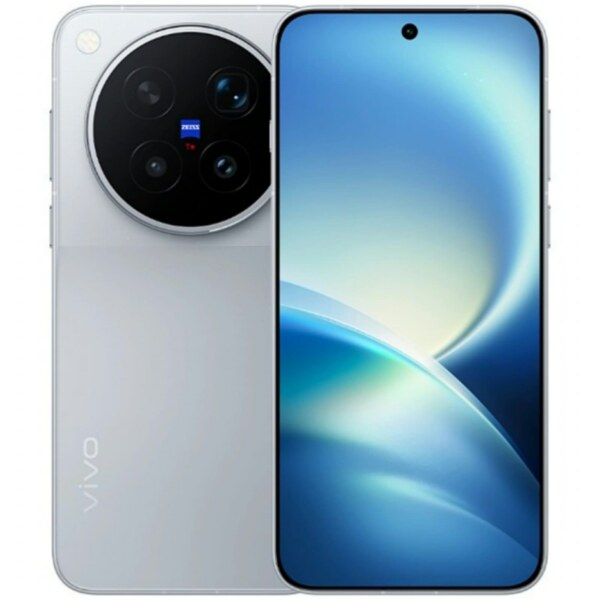
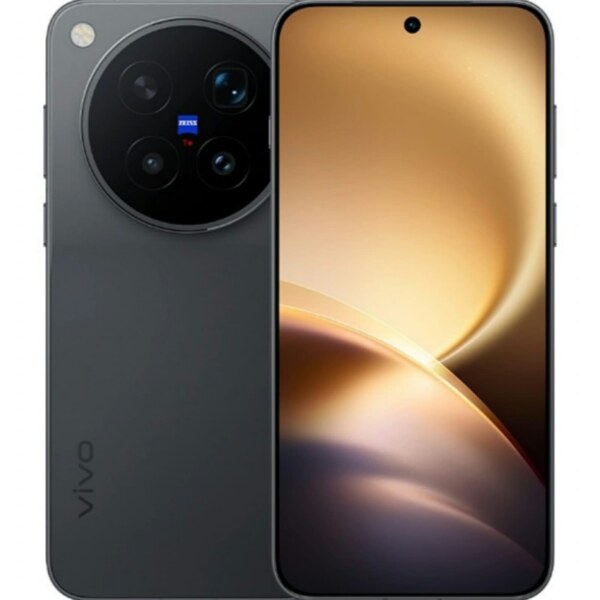
| Color | Black, Gray, White, Orange |
Display
| Size Display Size refers to the diagonal measurement of the screen, typically measured in inches. Larger screens offer more immersive experiences for gaming, media, and multitasking, while smaller screens are more compact and easier to handle | 6.36 inches |
| Resolution Resolution refers to the number of pixels on the screen, usually shown as width x height (e.g., 1080 x 2400). PPI (Pixels Per Inch) density measures pixel concentration, with higher PPI offering sharper, more detailed images and text. | 1216 x 2660 pixels |
| Type Display Type refers to the screen technology: AMOLED & Super AMOLED are the top choice for vibrant colors, deep blacks, power efficiency, and faster refresh rates, ideal for gaming and media. OLED offers excellent color and contrast but tends to be pricier. IPS LCD provides good color accuracy and wide viewing angles, balancing price and quality. TFT is budget-friendly but lower in quality with less vibrant colors and narrower viewing angles. For the best overall display, AMOLED or Super AMOLED are typically the best options | LTPO AMOLED |
| Aspect Ratio | 19.5:9 ratio |
| Pixel Density | ~459 |
| Screen & Body Ratio | ~90.8% |
| More |
1B colors, 144Hz, HDR10+, Dolby Vision, 2000 nits (HBM), 4500 nits (peak) |
Memory
| RAM | 12/16GB |
| ROM ~ Internal | 256GB/512GB/1TB |
| External Card Slot | No |
Performance
| OS | Android 17 |
| Chipset | Mediatek Dimensity 9600 Pro (2 nm) |
| CPU CPU (Central Processing Unit) mostly known as processors, CPU processes instructions in order to carry out certain functions that make your device operate properly. Processors are often described as the brain of computers, smartphones and tablets, Smartphones and tablets rely on processors to carry out their every task, Processors are an incredibly important factor in selecting any type of computing device, including your smartphone. | Octa-core (2x4.55 GHz & 3x4.35 GHz & 3x3.1 GHz) |
| GPU GPU (Graphics Processing Unit) is a single-chip processor designed to rapidly manipulate and alter memory to accelerate the creation of images in a frame buffer intended for output to a display, This includes things such as lighting effects, object transformations, and 3D motion. | Mali-G2-Ultra-NX |
Network
| SIM Type SIM Type refers to the type of SIM card used: Nano-SIM: The smallest and most common size in modern phones. eSIM: An embedded SIM that doesn’t require a physical card. Dual SIM: Allows two SIM cards for managing multiple networks. Triple SIM: Rare, supports three SIM cards in one device. Micro-SIM: Larger than Nano-SIM, found in older devices. | · Nano-SIM + Nano-SIM + eSIM (max 2 at a time) - International · Nano-SIM + Nano-SIM - China IP68/IP69 dust tight and water resistant (high pressure water jets; immersible up to 1.5m for 30 min) |
| Technology | GSM / HSPA / LTE / 5G |
| GPRS | |
| EDGE | |
| Speed | HSPA, LTE, 5G |
| 2G Network In this section you can see 2nd generation mobile data communication technology specifications. | GSM 850 / 900 / 1800 / 1900 |
| 3G Network |
HSDPA 800 / 850 / 900 / 1700(AWS) / 1900 / 2100 |
| 4G Network |
1, 2, 3, 4, 5, 7, 8, 18, 19, 20, 25, 26, 28, 34, 38, 39, 40, 41, 42, 43, 48, 66 |
| 5G Network | 1, 2, 3, 5, 7, 8, 18, 20, 25, 26, 28, 34, 38, 39, 40, 41, 48, 66, 77, 78, 79 SA/NSA/Sub6 |
Primary Camera
| Camera Camera |
50 MP, f/1.6, 24mm (wide), 1/1.28", 1.22µm, PDAF, OIS 64 MP, f/2.5, 85mm (periscope telephoto), 1/2.0", 0.7µm, PDAF (18cm - ∞), OIS, 3.5x optical zoom 50 MP, f/2.0, 15mm, 119˚ (ultrawide), 1/2.75", 0.64µm, AF |
| Features | Laser AF, color spectrum sensor, Zeiss optics, Zeiss T* lens coating, LED flash, panorama, HDR, 3D LUT import |
| Video | 8K@30fps, 4K@30/60/120/240fps, 1080p@30/60/120/240fps, 17 EV TrueDynamic Log, Dolby Vision HDR, 4K@120fps 10-bit Log, 10-bit 422 APV |
Selfie Camera
| Camera Camera |
50 MP, f/2.0, 20mm (wide), 1/2.76", 0.64µm, AF |
| Features | HDR |
| Video | 4K@30/60fps, 1080p@30/60fps |
Connectivity
| Wi-fi | Wi-Fi 802.11 a/b/g/n/ac/6/7, dual-band |
| Bluetooth | 5.4/6.0, A2DP, LE, aptX HD, LHDC 5 |
| Positioning | GPS (L1+L5), GLONASS (L1), BDS (B1I+B1c+B2a+B2b), GALILEO (E1+E5a+E5b), QZSS (L1+L5), NavIC (L1+L5) |
| USB | USB Type-C 3.2, OTG |
| NFC | Yes |
| FM Radio | No |
| Infrared port | |
| Browser | HTMAL |
| Java |
Sensors
| Fingerprint | under display, ultrasonic |
| Proximity Sensor | |
| Compass Sensor | |
| Accelerometer | |
| Light Sensor | |
| Gyroscope Sensor | |
| Color spectrum The color spectrum is a Sensor |
Sound
| Loudspeaker | Yes, with stereo speakers |
| 3.5 mm Audio Jack 3.5 mm Audio Jack is a popular and common audio output jack. | No 24-bit/192kHz Hi-Res audio |
Battery
| Battery Type | Si/C Li-Ion 6510 mAh |
| More |
90W wired 40W wireless Reverse wireless Reverse wired |
Price
| Expected Price | 135,000 |
More
PROS
- Excellent display,
- Powerful 2nm chipset,
- Versatile Zeiss cameras,
- Large battery,
- Fast charging,
- Strong durability,
CONS
- No microSD slot,
- No 3.5mm headphone jack,
- No FM radio,
The vivo X500 Pro is a premium flagship smartphone combining a compact design, powerful hardware, and an advanced camera system. Announced on September 21, 2026, it is expected to launch on September 29 at around €850. Its 6.36-inch LTPO AMOLED display offers a sharp 1216 × 2660 resolution, 144Hz refresh rate, HDR10+, Dolby Vision, and an impressive 4500-nit peak brightness, making it well suited for gaming, streaming, and outdoor viewing. Performance comes from the 2nm MediaTek Dimensity 9600 Pro, paired with 12GB RAM and up to 1TB of UFS 4.1 storage. There is no microSD card slot, but the generous storage options should satisfy most users. The phone also features Android 17 with OriginOS 7 and up to five major OS updates.
Photography is a major highlight. Its triple rear camera setup includes a 50MP main sensor with OIS, a 64MP periscope telephoto with 3.5x optical zoom and OIS, and a 50MP ultrawide with autofocus. Zeiss optics, T* coating, laser autofocus, and 8K video recording further strengthen its imaging capabilities. A 50MP autofocus selfie camera supports 4K video. The 6510mAh battery supports 90W wired and 40W wireless charging. IP68/IP69 protection, stereo speakers, Wi-Fi 7, NFC, USB-C 3.2, and an ultrasonic fingerprint sensor add to its premium appeal.
| Model | vivo X500 Pro |
| Expected Price | ৳135,000 |
| Camera | 200MP 4320p |
| ROM | 256GB/512GB/1TB |
| RAM | 12/16GB RAM Dimensity 9600 Pro |
| Battery | 8000mAh 90W 40W |
Comments
Disclaimer Note
Disclaimer Note > We can not guarantee that the information on this page is 100% correct.